An Evening with Geoff Miller

Norfolk Cricket Society is delighted to welcome one of English cricket’s most engaging characters, Geoff Miller OBE, as our special guest speaker on Thursday 29 October, 7.30pm at Horsford Cricket Club, Norwich.
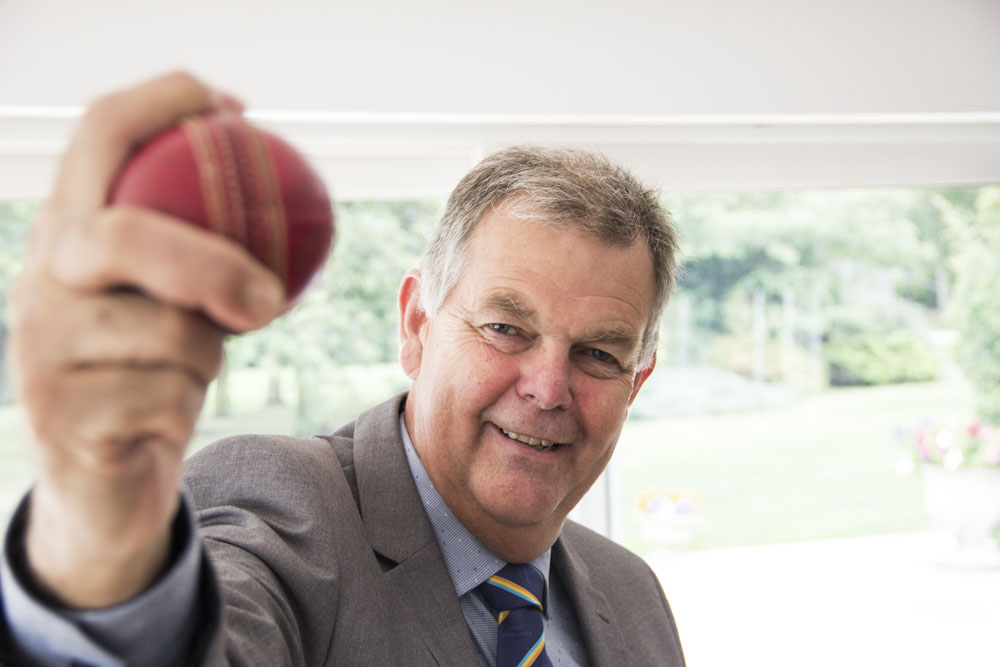
A former England, Derbyshire and Essex cricketer, and National Selector, Geoff Miller has enjoyed a remarkable career spanning more than four decades at the heart of the English game. And, as anyone who has heard him speak will know, his story is delivered with plenty of humour, warmth and a wonderfully infectious enthusiasm for cricket.

Miller made his England Test debut in 1976 against the formidable West Indies and went on to win 34 Test caps and 25 ODI caps, scoring more than 1,200 Test runs and taking 60 Test wickets with his dependable off-spin. His international career included some memorable Ashes encounters, including a five-wicket haul in England’s famous victory over Australia in Sydney in 1979 and a dramatic catch during the thrilling three-run win in Melbourne in 1982.
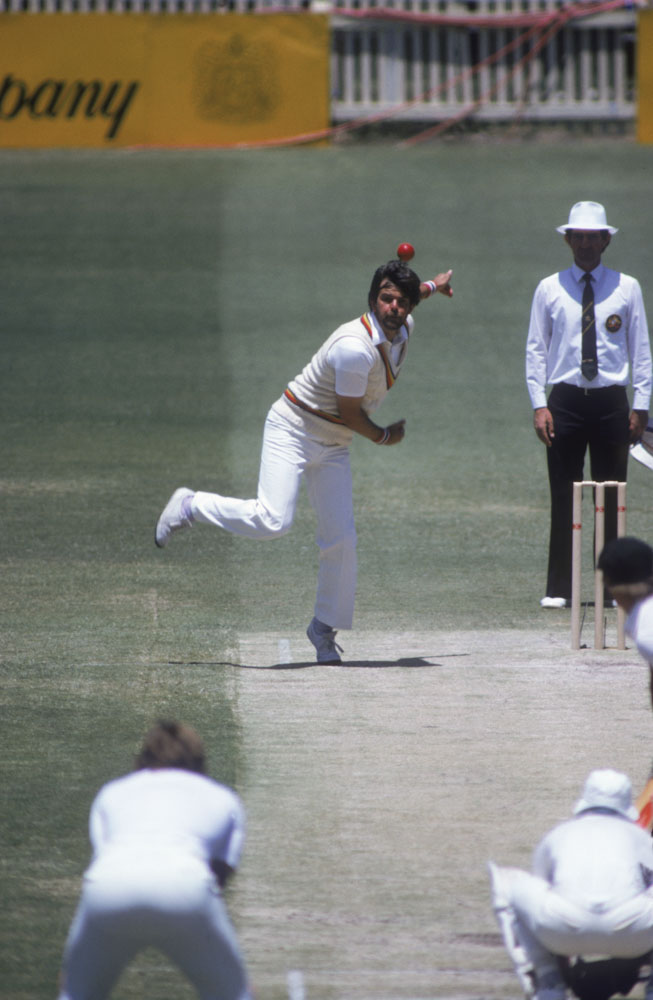
At county level, Geoff was a hugely respected all-rounder and captain. He led Derbyshire to the 1981 NatWest Trophy, their first major trophy for 45 years, before subsequently enjoying success with Essex. Along the way he shared dressing rooms with some of the great names of the era and experienced the full spectrum of professional cricket.

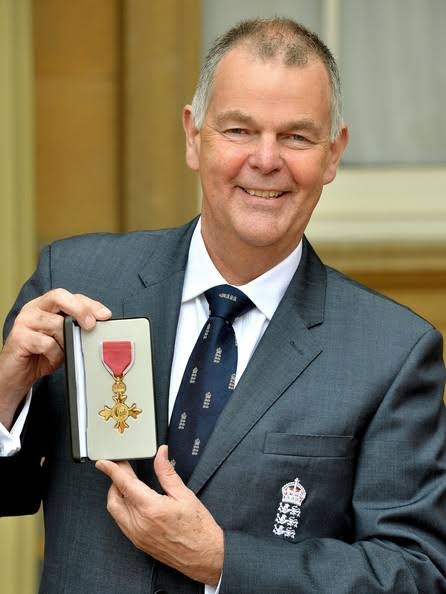
His playing career was followed by an equally fascinating second act. Geoff became an England selector in 2000 and, in 2008, was appointed the ECB’s first National Selector. During his tenure England won three successive Ashes series and reached the No.1 position in the Test rankings. He was therefore not only involved in watching England’s best players from close quarters, but also in making some of the most important decisions in English cricket.
So what can you expect from the evening?

Stories! Expect entertaining tales from England dressing rooms and Ashes tours, fascinating insights into the personalities behind the players, memories of county cricket, and an insider’s perspective on the pressures of international selection. There will undoubtedly be plenty of laughs too – Geoff is renowned for his ability to tell a good cricket story.

Whether you remember watching him play, followed England during his years as a selector, or simply love hearing the stories behind the scorecards, this promises to be a fascinating, entertaining and memorable evening of cricket conversation.

Join Norfolk Cricket Society on Thursday 29 October for an evening with Geoff Miller – a chance to hear the stories, experiences and opinions of a man who has been at the very heart of English cricket.

An autographed cricket bat will be auctioned on the night to raise funds for the prostate cancer charity which Geoff supports.

Admission is £10 for non-Norfolk Cricket Society members and pre-booking is required, please contact norfolkcricketsociety@gmail.com to book your place.
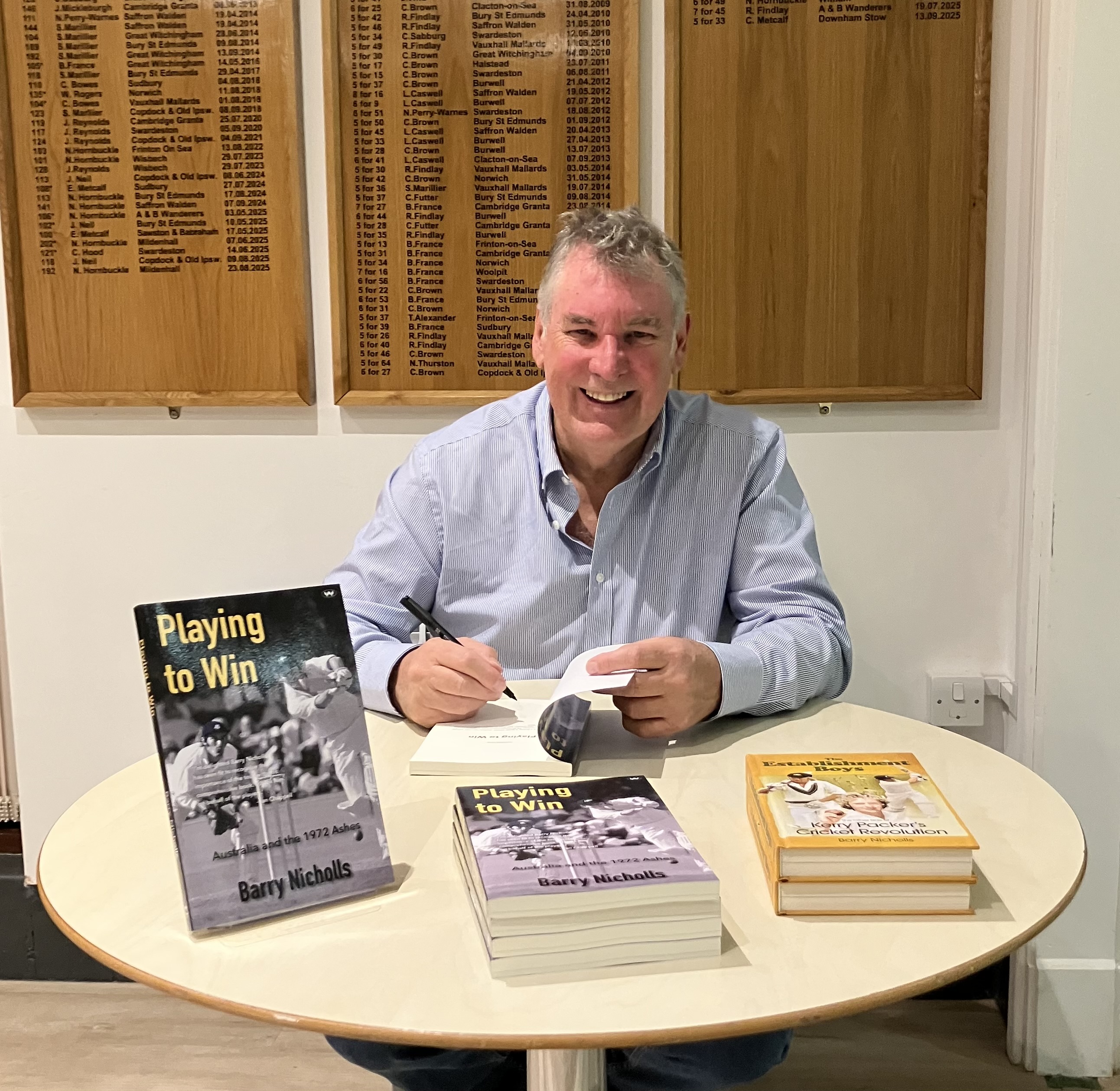
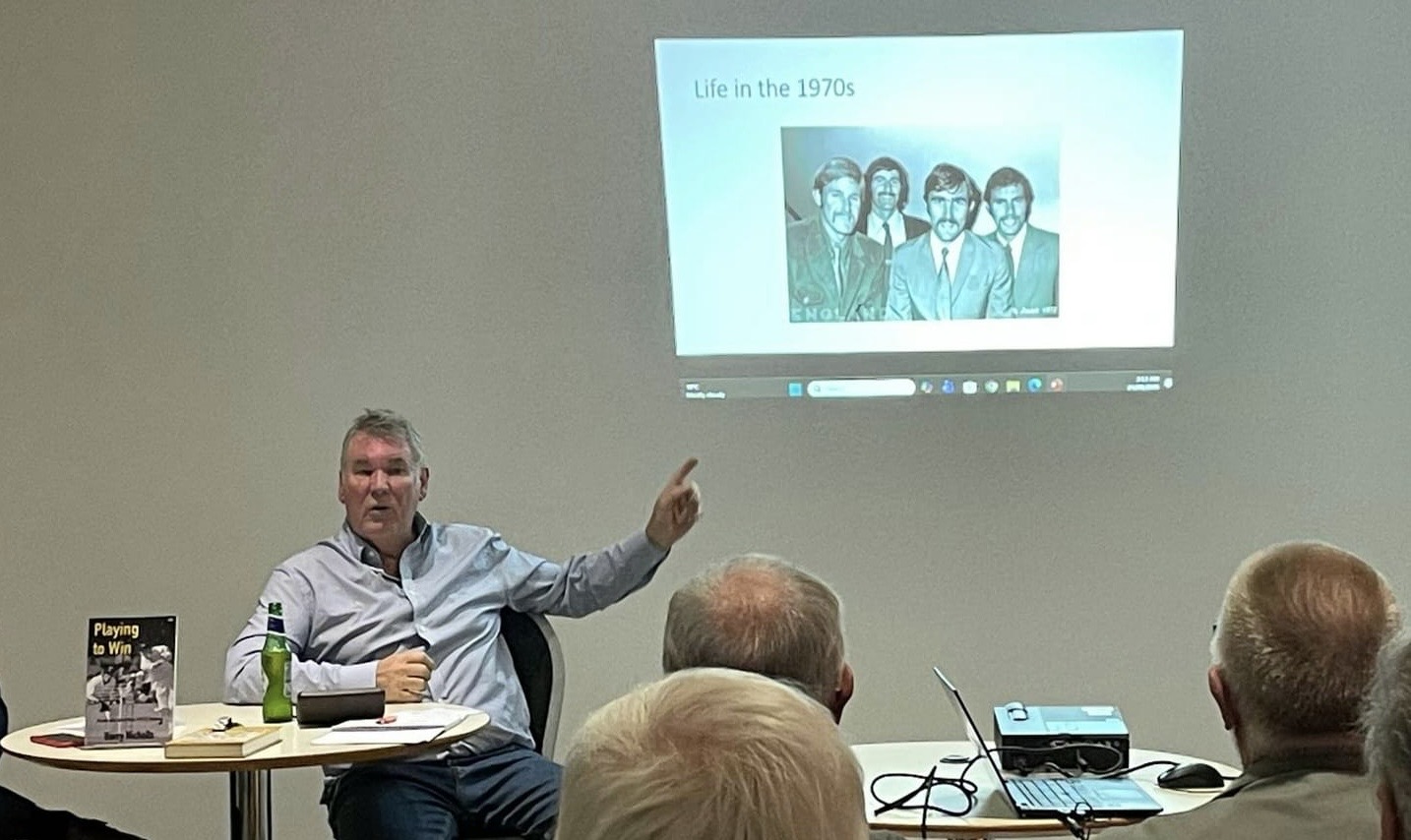
Playing to Win: review of an evening with Australian cricket writer Barry Nicholls

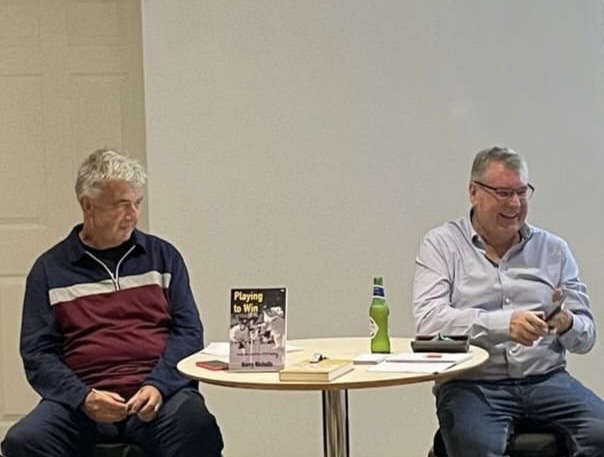
An Australian view of the Ashes was the theme of Norfolk Cricket Society’s first meeting of the 2026-27 programme at Manor Park, Horsford.

Cricket writer Barry Nicholls discussed his 10th book, Playing to Win (Wakefield Press), the story of the 1972 five-match Test series in England, which finished 2-2 after a see-saw summer.

A former A-grade district cricketer and ABC Radio broadcaster who lives in Perth, Western Australia, Nicholls is combining a speaking tour with visiting family in Scotland.

He told an appreciative audience he was hooked on cricket as a child after his father took him to the Adelaide Oval for the opening day of the Sixth Test in the 1970-71 Ashes series.

Nicholls was immediately captivated by the game, whereas his mother and two brothers were bored and complained to such an extent that the family left before the close of play.

The match was drawn but notable for Dennis Lillee’s five wickets on Test debut and Norfolk-born John Edrich making 130 in England’s first innings.

England, captained by Ray Illingworth, won the seventh Test at Sydney to complete a 2-0 series win and regain the Ashes after a gap of 12 years.

But that final Test was significant because it was Ian Chappell’s first as captain of Australia after Bill Lawry was ruthlessly axed.

Chappell immediately learned from defeat after studying how Illingworth led the side and handled his bowlers, but it was also a controversial match in which Illingworth led his team off the field after fast bowler John Snow was grabbed by an angry spectator and pelted with missiles.

In the 1972 series that followed, England retained the Ashes with victories at Old Trafford and on a fungus-infested, grassless pitch at Headingley, where “Deadly” Derek Underwood took 10 wickets on his recall to the side.

Highlights for Australia were two victories in the capital. In the Second Test at Lord’s, they secured an eight-wicket win in which Western Australia opening bowler Bob Massie recorded the phenomenal match figures of 16 wickets for 137 on his debut, only to vanish from Test cricket within a year.

And in the final Test at The Oval, which was allocated a sixth day, the tourists won by five wickets after Ian Chappell and younger brother Greg each scored first innings centuries and shared a partnership of 201.

It was a first Ashes series in England for Lillee, Greg Chappell and wicketkeeper Rod Marsh, and the inspiration for Nicholls’ book comes from the belief, shared by the players, that the tour was a turning point in Australian cricket. They emerged as confident, aggressive and the top side in the world by the mid-70s under Ian Chappell’s captaincy, as well as helping to shape the modern game.

With the encouragement of batsman Ross Edwards and Ian Chappell, author Nicholls tracked down many of the squad that toured England.

Nicholls argues that victory at The Oval in 1972 was vital to Ian Chappell’s continuation as captain, for a 3-1 series defeat might have seen him removed from the job.

With the new breed of Australian Test stars increasingly at odds with the game’s administrators, illustrated by Chappell’s strained relationship with Sir Donald Bradman, his reign as captain ushered in a new order of things as he became a prime mover in establishing Kerry Packer’s World Series Cricket.

Looking ahead during a question-and-answer session, the author admitted he was pessimistic about Australia’s chances in the 2027 Ashes series because of the ageing side and the failure to transition to new players.

Words by David Cuffley

Photos by Pete Golland & Rob Kelly

Taylor-made evening – the perfect fit!

The fight for a regular England place became a fight for life itself when James Taylor’s cricket career came to a devastating end at the age of 26.

Ten years ago, Taylor returned from playing a key role in England’s 2-1 Test series win in South Africa and was eagerly awaiting the international summer on home territory when a potentially fatal heart condition was diagnosed and his playing days were suddenly over.

After seven Tests, 27 one-day internationals and 9,306 first-class runs for Leicestershire, Nottinghamshire, England Lions and England, he was told he risked possible death if he played cricket, or exercised, ever again. The career of the 5ft 6in star batter and lifelong fitness fanatic was, as reflected in the title of his autobiography, “Cut Short”.

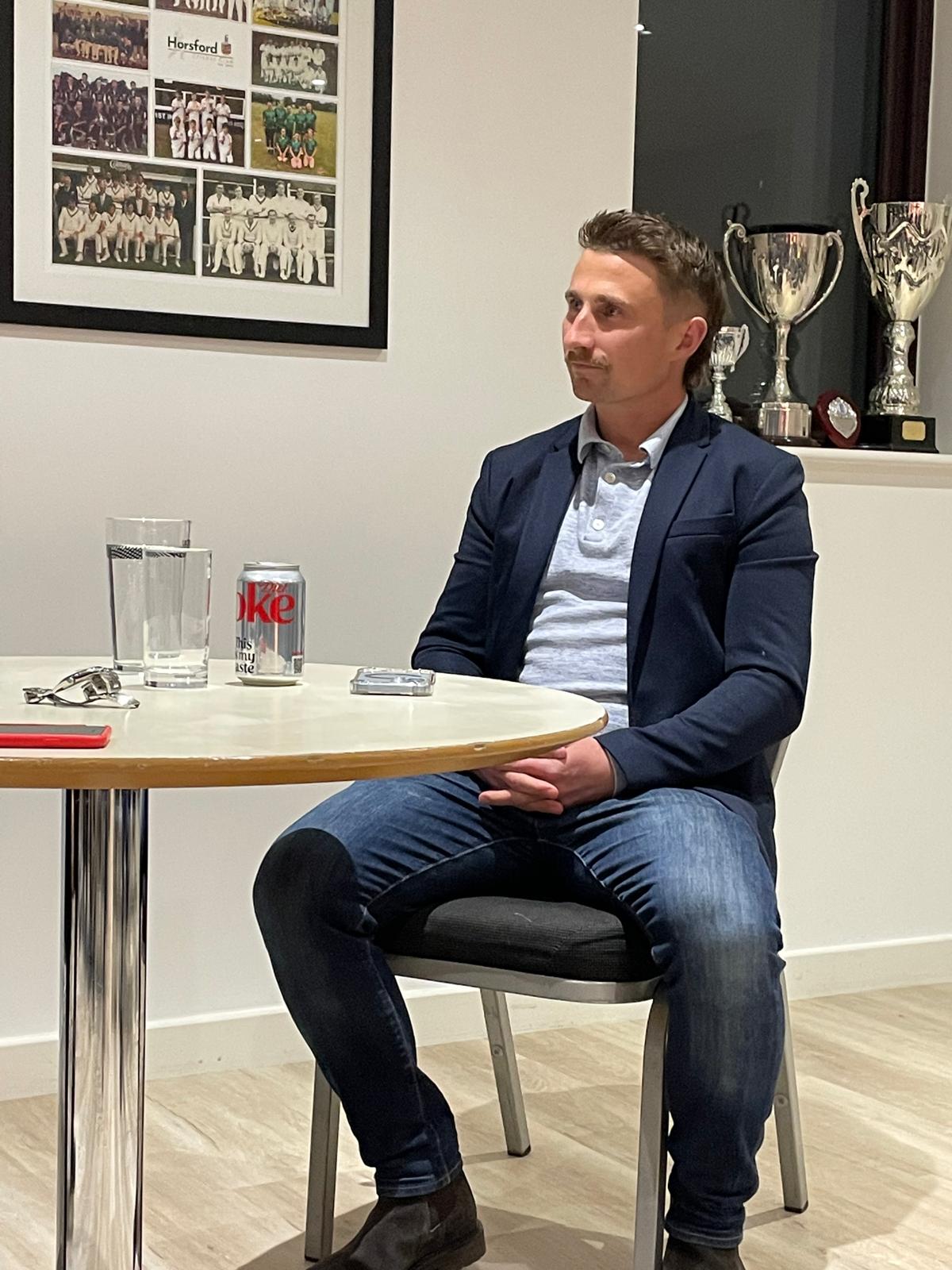
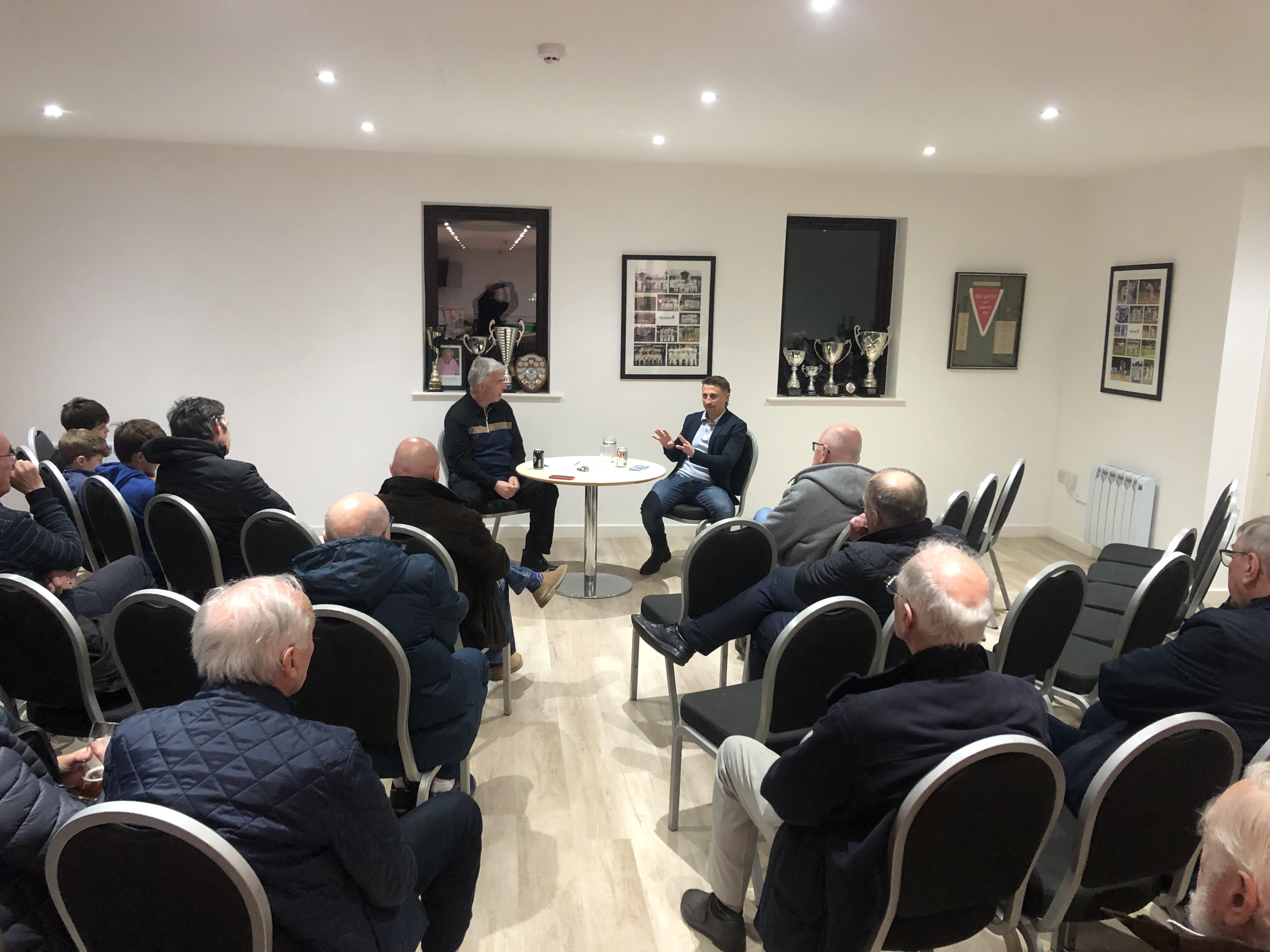
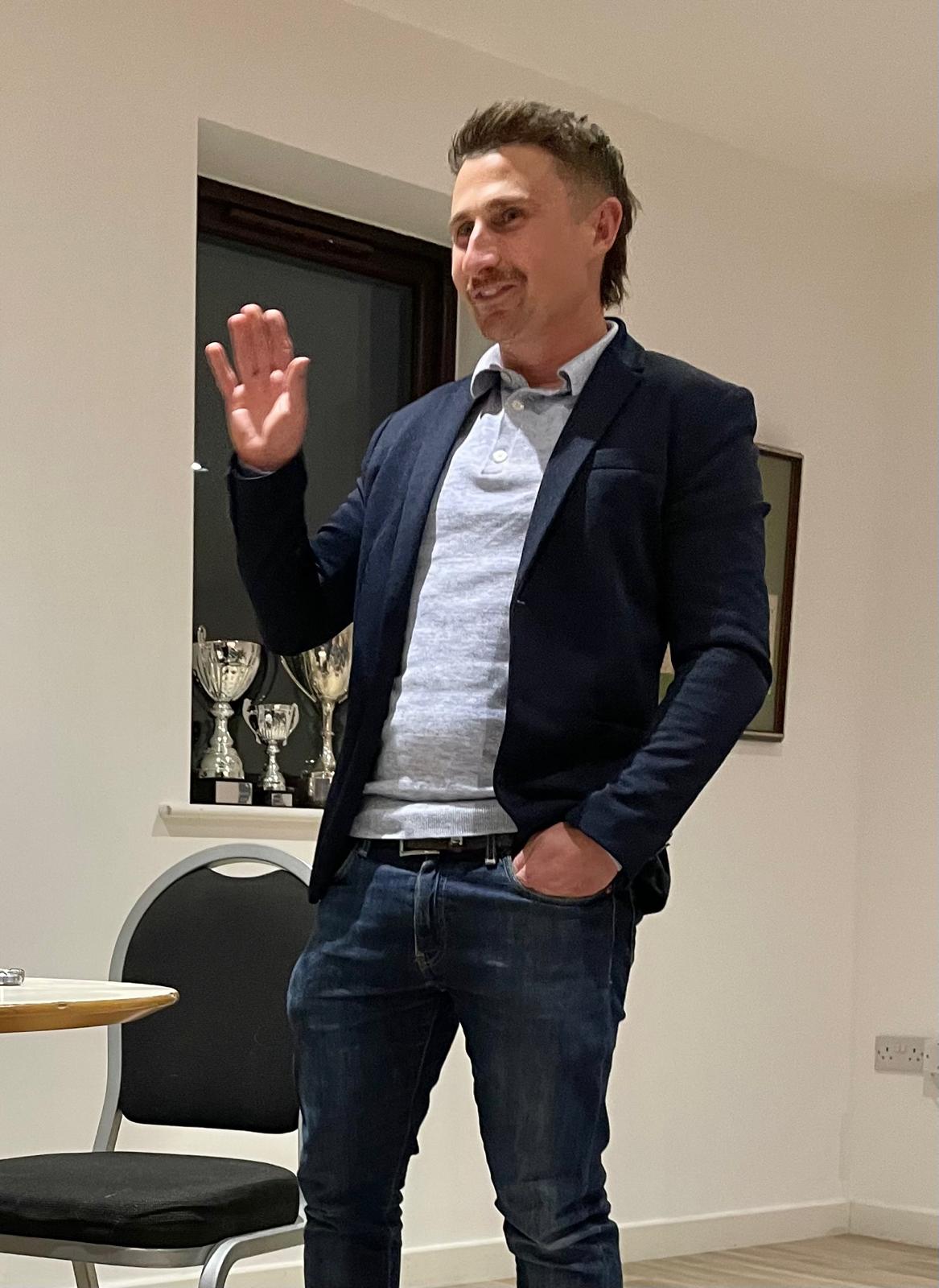
The 36-year-old Taylor was guest speaker of Norfolk Cricket Society at Manor Park on Thursday, March 26th, where he gave a moving account of the day in Cambridge in April 2016 when he thought he was going to die. He talked of his long road to recovery and his return to the sport in a variety of roles at international and county level, and as a writer and commentator.

What proved to be his final innings was a swift dismissal for 10, playing for Notts against Cambridge MCCU at Fenner’s. Then, during warm-ups before the second day’s play, his heart began pounding like a drum and he sought the sanctuary of the dressing room, in agony and in fear.

After a traumatic day and a two-hour journey to his home in Nottingham, Taylor was taken to the Queen’s Medical Centre and later City Hospital. At one point, his heart registered 265 beats per minute. What was initially thought to be a virus was a previously undiagnosed genetic heart disease, an arrhythmogenic right ventricular cardiomyopathy. His retirement from cricket was announced within days.

Taylor told an appreciative audience he grew up in Leicestershire in a horse-riding family. His father was a jockey, and his sister rode for Great Britain juniors. He went to boarding school aged seven and later, at Shrewsbury School, he excelled in football and rugby before cricket became his career.

He made his first-class debut in 2008, played his first one-day international in 2011, and his first Test against South Africa at Headingley in 2012, in what he regards as one of the greatest England sides. He made 34 in a partnership of 147 with an unappreciative and dismissive Kevin Pietersen, who scored a magnificent 149 but was axed for the final Test at Lord’s after the infamous text messaging saga.

Taylor’s one-day international career included England’s dismal 2015 World Cup campaign, where he was left stranded on 98 not out against Australia when last man James Anderson was controversially run out, and a century against the Aussies at Old Trafford later the same year.

He became an England selector in 2018 and later England head scout, stepping down from the role in 2022 and rejoining Leicestershire in a coaching role.

He answered audience questions on the current England regime, county cricket, The Hundred and the future of Test cricket in a white-ball dominated schedule.

Words by David Cuffley

Photos by Pete Golland

Richard Whitehead – Victory in Australia

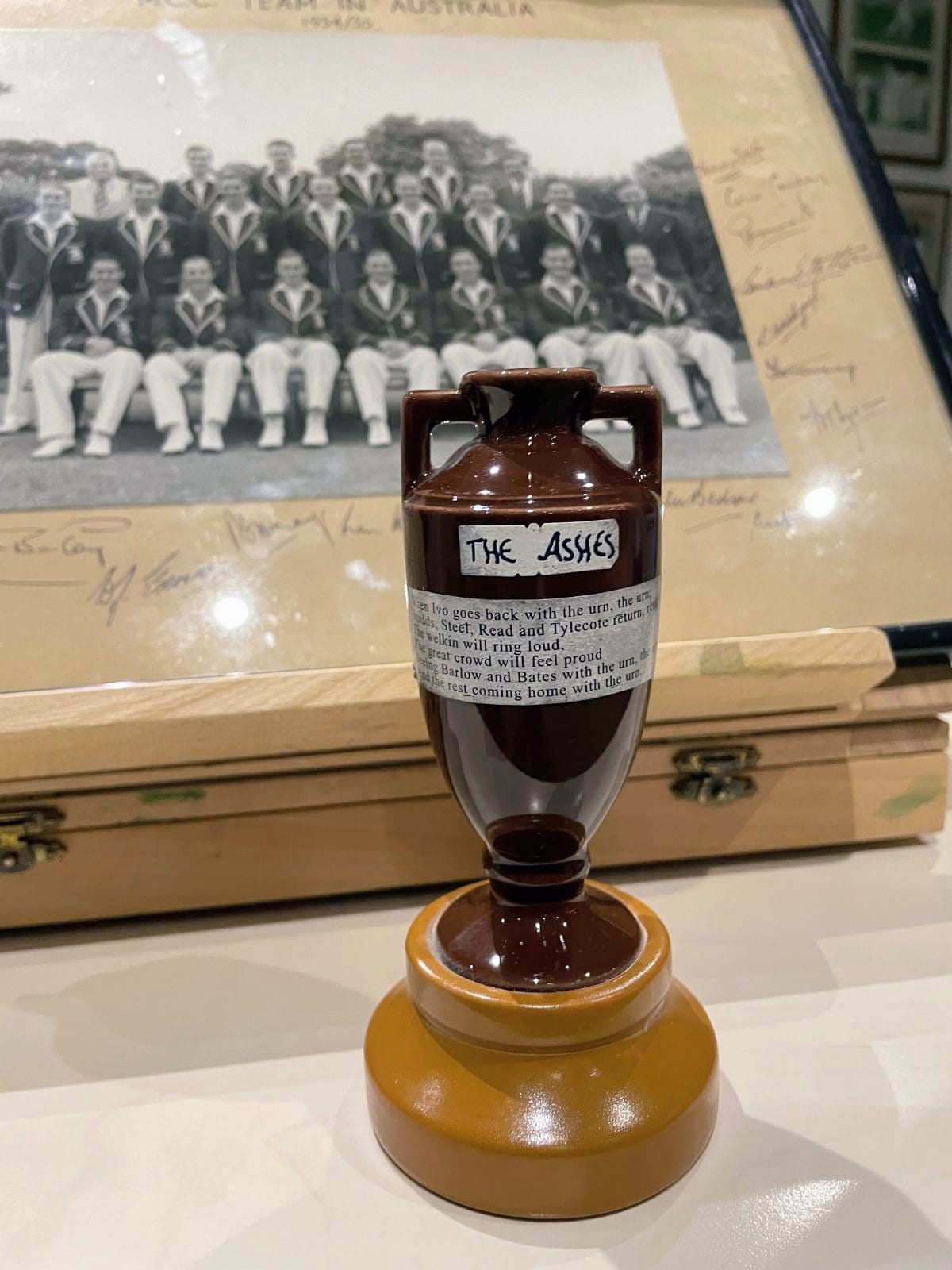
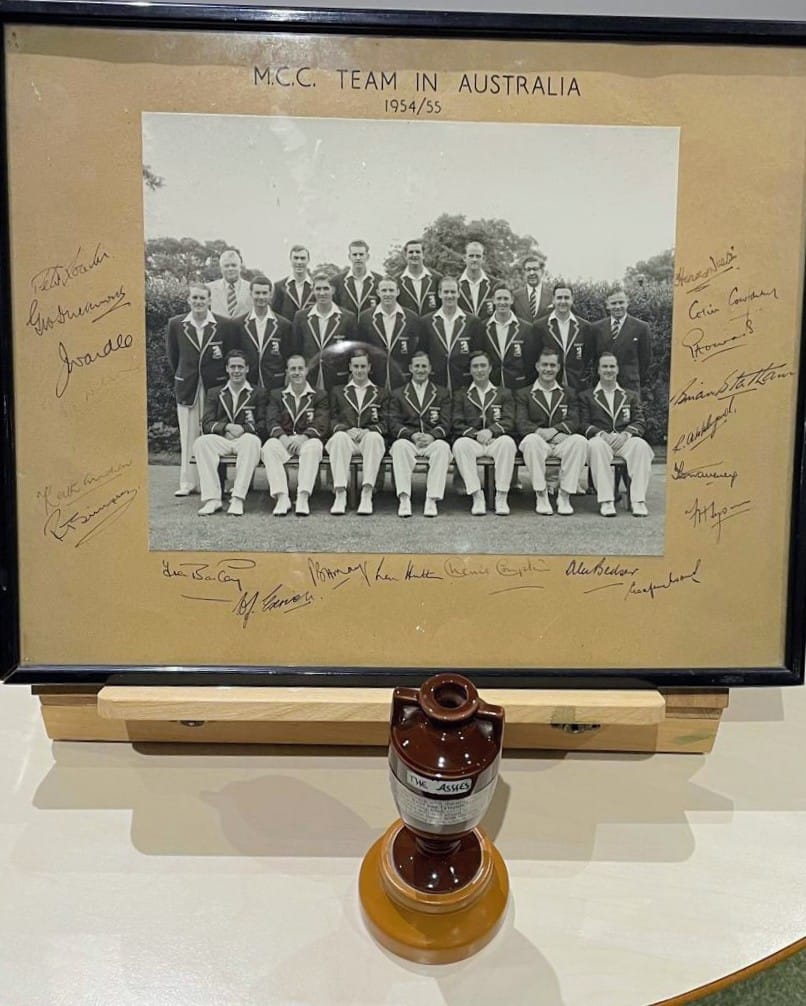
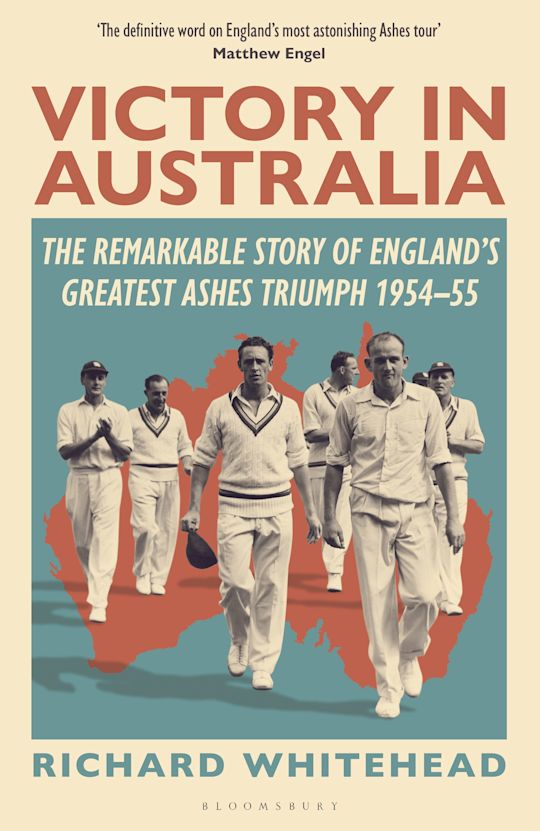
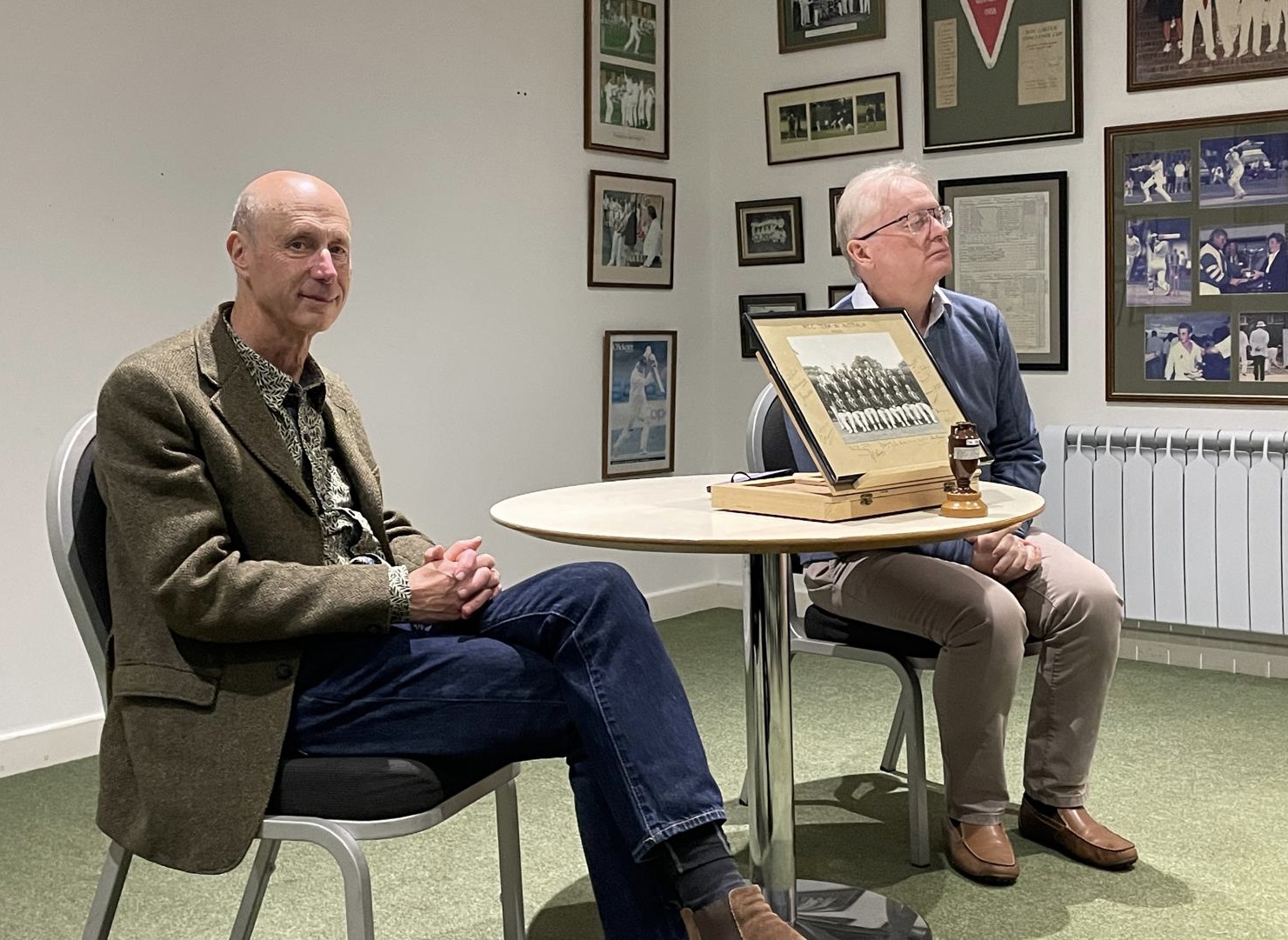
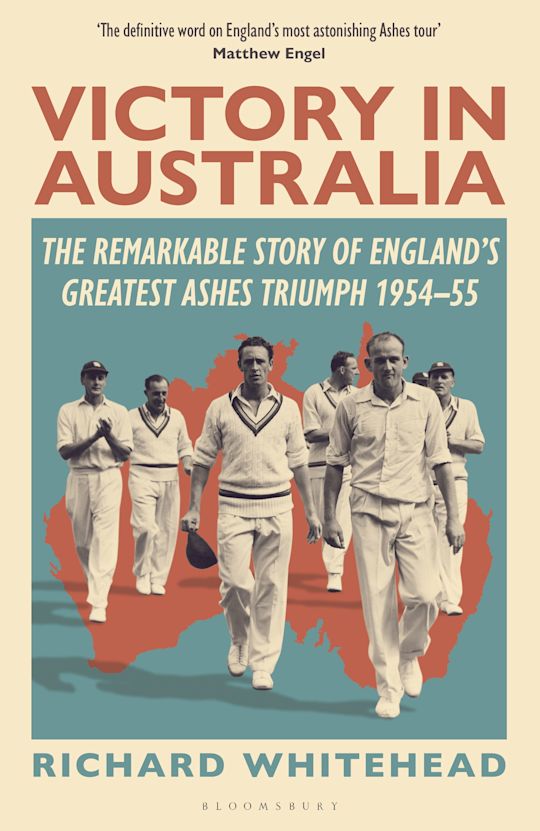
On Thursday 27 November 2025 our speaker was Richard Whitehead, whose topic was the Ashes tour of 1954/55. He has just published a book on this tour, entitled Victory in Australia. The Remarkable Story of England’s Greatest Ashes Triumph 1954-55. He was accompanied by David Woodhouse, the author of Who Only Cricket Know: Hutton’s Men in the West Indies 1953/54. They did not present a formal question-and-answer session but rather a conversation, led by Richard with David chipping in at appropriate times. This format worked extremely well.

The subject was presented in a well-structured fashion. Richard began by discussing the issue of the captaincy, describing how the MCC hierarchy were keen to replace Len Hutton, then England’s skipper but a professional, with David Sheppard, an amateur with impeccable credentials. However, their plan failed to come to fruition and Hutton remained in post. Richard then described how the omission of Fred Trueman from the touring squad was greeted with hostility from some sources and pointed out that the largely forgotten Jim McConnon was selected as an off-spinner ahead of Jim Laker.

Richard then dealt with the Tests in order. He pointed out that Hutton made a very poor decision by going into the first Test with no spinner and putting the Australians into bat: the hosts totalled 601 for eight before declaring and won by an innings and 154 runs. He then described how the quick bowling of Frank Tyson (famously) and Brian Statham, and the batting of the young amateurs, Peter May and Colin Cowdrey, enabled the tourists to turn the series around and win by a margin of three Tests to one. Richard justified his choice of subtitle for his book, providing evidence that this was indeed ‘England’s Greatest Ashes Triumph’.

Hutton came in for more criticism for his handling of Alec Bedser. The latter had been England’s finest bowler since the War and was expecting to play in the second Test. He only learned of his omission when he read the team-sheet posted in the dressing room immediately before the match. Richard justifiably described this as a very poor piece of man-management by Hutton, whose somewhat eccentric behaviour during the tour clearly indicated that he felt under considerable pressure.

Tailoring his presentation to his location, Richard discussed the involvement in the tour of Bill Edrich, a ‘bad boy’ whose fighting, if not his drinking, qualities apparently endeared himself to Hutton.

Richard Whitehead and David Woodhouse

Questions were then taken. It is an indication of the interest generated that these were many in number and detailed in nature. Richard answered these questions in a most knowledgeable fashion, and it was apparent that he had researched this tour in a most exhaustive and praiseworthy fashion. David’s book was a multi-award-winner and, if there’s any justice, Richard’s work will be similarly lauded.

All-in-all this was one of the most memorable evenings that the Norfolk Cricket Society has hosted for many a long year.

Words by Stephen Musk

Photos by Pete Golland

Victory in Australia – an epic Ashes series retold

Norfolk Cricket Society is looking forward to welcoming Richard Whitehead as our guest speaker on Thursday 27th November. Richard will be joining us to discuss his new book ‘Victory in Australia: The Remarkable Story of England’s Greatest Ashes Triumph 1954‑55’  

PLEASE NOTE, THIS EVENT STARTS AT 7PM

Richard Whitehead

‘Victory in Australia’ is the definitive account of the epic 1954-55 Ashes, a series which marked a watershed moment in the history of English cricket. Under the leadership of Len Hutton, one of the finest group of players to represent England won a series in Australia for the first time in more than 20 years.

It is a feat that has been repeated only four times in more than 70 years since. But Hutton’s men had to overcome the additional obstacle of losing heavily in the first Test – only one England team has managed to win an overseas Ashes series after such a monumental setback.

Praise for Victory in Australia

‘A high peak of post-war English cricket brought to vivid life with so much colourful detail. Richard Whitehead has written a masterpiece.’ – Stephen Chalke, cricket writer.

‘Meticulously researchedby Richard Whitehead, this book brings an epic tour from another age to life. It also serves as a reminder of why we are still so consumed by the Ashes. The portrait of Len Hutton, England’s first professional captain, is riveting.’ – Vic Marks, former England bowler.

 ‘It really is the best cricket book I have ever read’ – Douglas Miller, Association of Cricket Statisticians.

We are also looking forward to welcoming David Woodhouse, author of the award-winning book ‘Who Only Cricket Know: Hutton’s Men in the West Indies 1953/54’ who’ll be in conversation with Richard.

David Woodhouse

The evening will include a Q&A session and the opportunity for book signings, enabling you to engage directly with two authors whose work sets the benchmark for cricket-writing.

Entrance for guests is £7, payable on the door.

Copies of Victory in Australia (RRP £22) will be available to purchase at a special offer price for Norfolk Cricket Society members and guests.